
Shifting Left in the Age of Agentic AI
Independent, AI-enabled software quality, run by senior engineers.
Trusted by Product Teams at Leading Enterprises and Startups




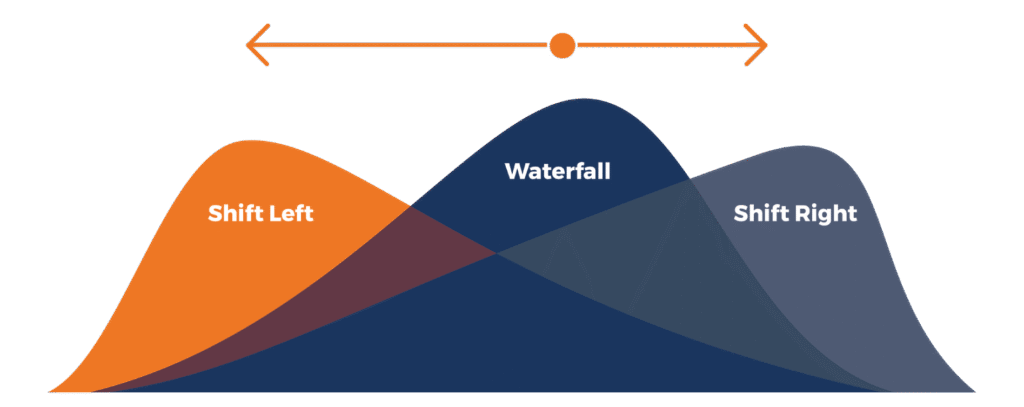
Shift-left was always the right instinct: find quality issues early, where they cost the least to fix. What changed is the engine. Think Tank QA pairs senior quality engineers with agentic AI that carries the repetitive load: regression scanning, defect logging, requirements mapping. Where the agents are in place, coverage runs continuously, and your engineers stay on the work that needs judgment.
We use AI for volume and speed. The judgment behind it comes from real experienced QA engineers who have been delivering at a high level for decades.
Proof
What This Looks Like in Practice
Engagements, with the specifics. These are outcomes for specific clients, not guarantees.
825
hours of regression, down to under 40.
For a Tier-1 telecom running 3,300 order-test scenarios, an automated, AI-documented end-to-end suite replaced roughly five months of manual execution and now runs overnight. Roughly three senior developers returned to feature work.
100%
consistency in defect reporting.
For a Fortune 500 telecom, three generative AI agents (the Requirements Intelligence, Defect Documentation, and Sprint Scan agents) gave every defect ticket one structure, reaching 100% consistency in defect reporting across the organization, and kept regression coverage running between sprints.
Product Quality Validation
Defects surfaced before launch.
For a global consumer brand, an independent pre-launch evaluation of a connected appliance surfaced firmware and functional defects, including a firmware fault that rendered units non-functional. Findings with safety implications were documented and recommended for the client’s engineering review.
WCAG 2.2 AA.
Comprehensive Accessibility Conformance Audit
For a digital publishing client, Think Tank QA audited four websites and two ebook readers against WCAG 2.2 AA, using automated tools and assistive-technology testing, and delivered VPATs for the team’s remediation.
Where your organization stands is what a Readiness Assessment establishes.
The Practice
Where AI Agents Earn Their Place
Three places agents do real work, under engineer oversight.
01
Administrative Load, Handled
Senior engineers lose hours to manual Jira entry, chasing logs, and reconciling requirements spread across documents. The Defect Documentation Agent turns plain-language notes into structured, context-rich tickets. The agent drafts; the engineer reviews.
02
Coverage Between Sprints
Manual capacity cannot catch every regression between sprints. The Sprint Scan Agent drives live platform URLs and scans the interface on a schedule, flags behavioral changes, and logs them for the engineer’s review. The team starts the day with the findings already drafted, ready to confirm.
03
One Connected Record
AI testing efforts often stall when the tools do not talk to each other. Think Tank QA builds a single project record where the Requirements Intelligence Agent keeps requirements, validation, and code in sync, so any behavior traces back to the requirement it came from.
In each case, the agents carry the volume and the engineers own the decisions. These three agents are Think Tank QA’s Quality Intelligence practice: agentic AI under senior-engineer governance. It is Humans in the Loop, applied to agentic QA.
The Difference
Unfiltered AI, or AI With Engineers Behind It
Most teams can now generate tests, tickets, and reports with AI. The question is what stands behind the output.
Unfiltered AI
Unfiltered AI produces volume and assumes it is correct.
AI With Engineers Behind It
The same agents, run by senior QA engineers, produce volume and then validate it against judgment that does not depend on the tools.
What Think Tank QA sells is that difference: engineers who own what the agents produce.
Services
- Four-week, fixed-scope engagement
- QA maturity scored across six dimensions
- A 30/60/90-day agentic AI roadmap
- Generative AI agents on the repetitive load
- Senior-engineer review on every output
- Coverage that runs between sprints
- Quality gates from requirements onward
- Training and realignment for your teams
- Workflows where engineers govern AI agents
- End-to-end happy-path and sad-path testing
- Severe defects surfaced before launch
- An independent launch-readiness view
- Side-by-side technical benchmarking
- Your product against one to three competitors
- Scored against an agreed rubric
- Automated scans plus assistive-technology testing
- Mapped against WCAG 2.2 AA
- VPATs delivered for remediation
Start With a Four-Week Assessment
Four weeks.
Fixed scope, fixed bid.
Dedicated team.
Under pressure to bring AI into your QA, or started and stalled? This four-week engagement establishes where your organization stands today and delivers a prioritized roadmap for putting agentic AI to work in your SDLC: your Quality Intelligence roadmap. A request list goes out before the engagement begins, so the four weeks are spent on assessment, not on access and provisioning.
You receive:
- AI Readiness Scorecard: your QA maturity scored across infrastructure, data, coverage, CI/CD, team capability, and change readiness.
- Use-Case Prioritization Matrix: candidate QA activities scored on impact and feasibility, mapped to an agent framework.
- Infrastructure and Data Readiness Report: your codebase, pipeline, and data, profiled for AI integration.
- QI Roadmap: a phased 30/60/90-day plan with owners, dependencies, and success metrics.
- Executive Summary: a one-to-two-page narrative for leadership, covering current state, the opportunity, the recommended path, and the investment rationale.
- Executive Readout: a live 60-minute brief to leadership, with the readiness scores and 30-day quick wins.
What Are You Working On?
Tell us where your QA stands today and where you want AI to take it.